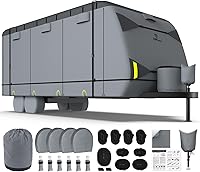
What Is the Best RV Cover? Fabric, Fit and Length
The best RV cover is the one sized for your RV and suited to your storage weather. Compare fabric, water resistance, ventilation, tie-downs and access panels before choosing.
On this page (9 sections)
- What makes an RV cover the best choice?
- Which RV cover fabric suits your weather?
- How do you get the right RV cover fit?
- Which features help a cover stay secure?
- Is waterproof or breathable better for an RV cover?
- How much access should a cover allow?
- Which RV covers fit different needs?
- What should you check before buying an RV cover?
- What is the best RV cover for your rig?
The best RV cover is the right length for your rig, made from fabric suited to your weather, and secure enough to stay in place. Start with your RV type and measurements, then compare water resistance, breathability, vents, straps and access panels.
No single cover is best for every RV. A travel trailer stored in a damp climate has different needs from a fifth wheel facing wind and snow, so match the cover to both the vehicle and the storage site.
For a closer look at travel trailer options, see our RV covers for travel trailers by length. If you’re weighing winter protection, our guide to whether you should cover your RV in winter covers the main trade-offs.
What makes an RV cover the best choice?
The best RV cover balances fit, weather protection, airflow and access for the way you store your vehicle. A strong feature in one area cannot make up for a poor size match or a cover that doesn’t suit your climate.
Use this checklist to compare options:
| What to compare | Why it matters |
|---|---|
| RV type and length | A cover made for a travel trailer may not fit a fifth wheel correctly |
| Fabric and layers | Construction affects how the cover handles rain, sun, snow and abrasion |
| Water resistance | Waterproof and water-resistant describe different levels of rain protection |
| Breathability and vents | Airflow can help moisture escape and balance pressure |
| Straps and fit panels | Cinching features help reduce slack and wind billowing |
| Doors and access panels | Zippers can make it easier to check or load the RV while covered |
| Reinforcement | Extra material at corners and edges can help address wear points |
Treat marketing terms as a starting point, not the whole decision. Look for specific details about fabric, weather suitability and fit features.
Which RV cover fabric suits your weather?
Choose fabric based on the conditions at your storage spot and how much breathability you need. Waterproof fabric prioritizes blocking water, while water-resistant breathable designs can be a better match for moderate climates with high moisture.
ADCO describes its Designer Series Aqua Shed as designed for moderate climates with high moisture. It has a triple-layer AquaShed top and triple-layer polypropylene sides, and ADCO describes the material as water-resistant and breathable.
RVMasking describes its 9-layer non-woven fabric as waterproof, with a water-repellent outer coating and a breathable membrane. Those features address rain and airflow in the product’s design, but no cover can guarantee a dry RV in every storage setup.
Sun exposure also matters. UV protection can help reduce exposure that contributes to fading and cracking, but you should still check that the cover’s materials and fit suit the conditions where the RV will be parked.
For more on fabric choices, read our guide to the best material for an RV cover. If moisture is your main concern, our RV cover moisture guide explains how airflow and storage conditions fit into the decision.
How do you get the right RV cover fit?
Measure the RV and match it to the cover’s stated vehicle type and length range. Check whether the cover accommodates equipment such as air conditioners, ladders and slide-outs before you buy.
Use these steps:
- Identify whether you have a travel trailer, fifth wheel, pop-up or motorhome.
- Measure the RV using the cover maker’s sizing directions.
- Include exterior features that affect the fit, such as ladders or air conditioners.
- Compare your measurement with the cover’s exact range.
- Check that doors and service areas line up with the cover’s access panels.
A cover that is too loose can catch more wind, while a cover that is too short may leave sections exposed. Adjustable tension panels, elastic hems and cinching straps can help manage slack, but they do not replace measuring carefully.
For example, the ADCO cover here is sized for travel trailers from 26 ft 1 in to 28 ft 6 in and accommodates slide-outs and ladders. The Classic Accessories PolyPRO3 is designed for trailer bodies 22 to 24 ft long and 118 in high from ground to roof.
If your RV has slide-outs, read how an RV cover fits over slide-outs before choosing a size.
Which features help a cover stay secure?
Choose a cover with adjustable straps and tension points that match your RV’s shape. Straps, elastic hems and cinching systems can help limit slack and billowing, especially in exposed storage areas.
Look for features that address your setup:
- Over-roof straps that hold the cover across the top
- Bottom straps or hems to help secure the lower edge
- Front and rear tension panels that reduce loose fabric
- Reinforced corners where sharp edges may rub
- Vents that let air move through the cover
- Gutter covers or ladder caps that protect the fabric from contact points
These details matter most when the cover is exposed to wind or sits on the RV for an extended period. Follow the included installation directions and inspect the tie-downs after fitting the cover.
The RVMasking travel trailer cover includes over-roof straps, a long horizontal strap, bottom straps, elastic hem and tension panel straps. Its package also includes gutter spout covers, tire covers and a repair patch.
Is waterproof or breathable better for an RV cover?
Neither feature is best on its own; choose the combination that matches your weather and storage conditions. A waterproof label addresses water resistance, while breathability and vents address airflow.
A water-resistant breathable cover may suit a damp, moderate climate. If your RV faces frequent rain, a waterproof option may be appealing, but airflow remains relevant because moisture can come from condensation as well as rain.
Keep the RV dry before covering it, and check for damp spots during storage when you can. Our article on whether RV covers are waterproof explains the distinction between waterproof and water-resistant designs.
How much access should a cover allow?
Choose access panels based on how often you need to enter or load the RV while it is covered. Zippered panels can provide access without removing the whole cover, though you should confirm their location suits your doors.
The RVMasking travel trailer cover has three roll-up side panels and a rear zippered panel intended for toy hauler trailers. Classic Accessories includes zippered panels for access to RV doors.
ADCO describes multiple passenger-side zipper entry doors on its Designer Series cover. Check panel placement against your RV before choosing, especially if you need frequent access to storage compartments or interior areas.
Which RV covers fit different needs?
These examples suit different RV types, sizes and priorities. Use the stated fit range first, then compare the material and securing features against your storage conditions.
RVMasking 26-28 ft 9-Layer Travel Trailer Cover
This travel trailer cover is sized for RVs from 26 ft 1 in to 28 ft 6 in. RVMasking describes its non-woven fabric as waterproof and breathable, with a water-repellent outer layer and middle membrane.
Its fit system includes over-roof straps, bottom straps, an elastic hem and front and rear tension panel straps. The package also includes four tire covers, a propane tank cover, a tongue jack cover, gutter spout covers and a repair patch.
Consider it if your travel trailer falls within its size range and you want access panels plus several included covers and setup accessories. Check the panel positions and the instructions against your RV layout before installation.
ADCO Designer Series Aqua Shed 26-28.5 ft Travel Trailer Cover
The ADCO cover fits travel trailers from 26 ft 1 in to 28 ft 6 in. It has a triple-layer AquaShed top and triple-layer polypropylene sides, with a water-resistant, breathable design aimed at moderate climates with high moisture.
ADCO says the cover accommodates different front ends, air conditioners, wall heights, slide-outs and ladders. It also describes built-in vents and front, rear and bottom cinching to remove slack.
Consider it for a travel trailer in a moderate, damp climate if those fit allowances match your RV. Its water-resistant construction differs from a fully waterproof cover, so choose based on the rain exposure you expect.
Classic Accessories PolyPRO3 Deluxe 22-24 ft Travel Trailer Cover
This cover is designed for travel trailers and toy haulers from 22 to 24 ft long, up to 118 in high from ground to roof. Its thick triple-ply top is intended to protect against rain, snow, dirt and scratches.
Adjustable tension panels and elasticized hem corners help create a close fit, while air vents are designed to reduce wind stress and inside moisture. Zippered panels allow access to RV doors, and the package includes integrated straps, a toss bag system, a stuff sack and ladder caps.
Consider it for a 22-24 ft trailer body if its size and access features suit your setup. It is a water-resistant polypropylene cover, so compare that with your local weather before deciding.
RVMasking 40-43 ft 9-Layer 5th Wheel Cover
This RVMasking cover is made for a 40 ft 1 in to 43 ft fifth wheel. Its nine-layer non-woven fabric includes a water-repellent outer layer and a breathable membrane, according to the product description.
The cover includes over-roof straps, a long horizontal strap, bottom windproof straps and tension panel straps. It also comes with four tire covers, gutter covers, a repair patch and weighted toss sticks for strap installation.
Consider it if you have a fifth wheel in this length range and want a cover designed around that RV shape. Confirm the measurements and access-panel placement before ordering.
What should you check before buying an RV cover?
Confirm the exact size, RV type and expected storage conditions before choosing a cover. A good match on paper still needs to work with your equipment, doors and parking location.
Use this final check:
- Does the cover match your RV type and measured length?
- Does its stated range include your air conditioner, ladder and slide-outs?
- Is the fabric waterproof or water-resistant, and does that suit your climate?
- Does the cover have vents or breathable material?
- Can you secure it with the straps and tension points provided?
- Do the access panels line up with the doors you use?
- Are sharp edges or contact points covered or reinforced?
If you need to put the cover on by yourself, follow our step-by-step RV cover installation guide. It helps you plan the strap sequence and avoid dragging fabric across sharp edges.
What is the best RV cover for your rig?
The best RV cover is the one that fits your RV’s measured size and matches your storage weather. Choose a breathable, water-resistant design for conditions it is made to handle, or compare waterproof options when rain protection is your priority.
For a mid-size travel trailer, compare the RVMasking and ADCO covers by fabric, straps, vents and access. For a shorter trailer, the Classic Accessories option has a smaller stated fit range; for a long fifth wheel, use the fifth wheel cover sized for that RV type.
Continue with our travel trailer cover guide by length to narrow the fit.
Frequently asked questions
What is the best RV cover material?
The best RV cover material depends on your weather and storage conditions. A breathable fabric can help moisture escape, while water-resistant or waterproof fabric sheds rain differently.
Check the cover’s material, weather claims, vent design and fit, then choose for the climate where your RV will sit.
Should an RV cover be waterproof?
An RV cover does not have to be fully waterproof for every storage situation. Water-resistant, breathable fabric may suit moderate climates with high moisture, while a waterproof cover may appeal where rain protection is a priority.
Pair the fabric choice with ventilation and a secure fit.
How do I choose the right RV cover size?
Measure your RV according to the cover maker’s sizing instructions, including the parts that affect length and height. Compare those measurements with the cover’s stated range, then check allowances for air conditioners, ladders and slide-outs.
A loose or overly tight cover can be harder to secure.
Can an RV cover trap moisture?
An RV cover can contribute to trapped moisture if airflow is limited or the fit holds damp air against the RV. Look for built-in vents and breathable fabric, and make sure the RV is dry before covering it.
Read more in our guide to whether RV covers work or trap moisture.
Should I cover my RV in winter?
Cover your RV in winter when the cover fits securely and its fabric suits your storage conditions. A cover can shield the exterior from snow, dirt and UV exposure, but access, ventilation and wind protection still matter.
See our guide on whether to cover an RV in winter.