Can an RV Cover Fit Over Slide-Outs?
An RV cover can fit over slide-outs only if the cover is made or sized for the RV with its slides extended. Check the cover’s stated fit, measure the full width, and follow its instructions before covering.
On this page (8 sections)
- Can an RV cover fit over slide-outs?
- Should you cover an RV with the slide-outs in or out?
- How should you measure an RV cover with slide-outs?
- How can you reduce rubbing at slide-out edges?
- Which covers and straps fit this kind of setup?
- How do you put a cover on an RV with slide-outs?
- What should you do if the cover is too tight?
- What is the safest fit rule for an RV cover with slide-out?
An RV cover can fit over slide-outs only if it is designed and sized for the RV with the slides extended. Measure the widest point with slides out, check the cover’s fit range and instructions, and protect any edges that could rub the fabric.
Many standard covers are shaped around a closed RV. An extended slide changes the width and creates corners where fabric may pull tight or flap, so the fit needs more than a length check.
Can an RV cover fit over slide-outs?
It can, when the cover accommodates the slide-outs in the position you plan to cover. Confirm that fit with the cover instructions or maker before putting it on.
A cover that fits the RV body with slides retracted may be too narrow when they are extended. Extra width alone does not guarantee a good fit, because the cover also needs to sit securely around the RV without excessive tension or loose areas.
If the cover is made for the closed profile, retract the slides first. Our guide to RV cover fabric and fit explains how dimensions and shape affect cover choice.
Should you cover an RV with the slide-outs in or out?
Retract the slide-outs unless the cover instructions specifically allow covering them extended. This gives the cover the RV’s narrower profile and reduces contact with protruding edges.
The RV maker's guidance comes first for slide operation and storage. Check the cover instructions too, since fit and installation details vary by cover.
If you plan to keep slides out under a cover, confirm that the fabric can reach the body without being stretched over corners. Don't pull a tight cover into place by forcing straps or seams.
Can you cover only the slide-outs?
A full RV cover is intended to cover the RV body, so a partial cover needs to be made for that use. Don't assume that a standard full cover can be rearranged to cover only the slide-outs safely.
A loose or improvised cover can catch wind or rub against the slide seals. For long-term storage, compare the benefits and drawbacks in whether to cover an RV in winter.
How should you measure an RV cover with slide-outs?
Measure the RV in the same slide position you expect to use under the cover. If the slides will remain extended, include their full width and any fixed parts that change the outline.
Record the RV's length, widest width, and height, then compare each with the cover's stated size range. Follow the maker's measuring method, since covers may define length or fit differently.
Don't choose by RV model name alone. Two units in the same model line can have different lengths, heights, or accessories, and a cover sized for one may not fit the other.
How can you reduce rubbing at slide-out edges?
Protect sharp corners and keep the cover from pressing hard against them. Soft padding can help reduce direct rubbing when the cover instructions permit it.
Check all contact points before tightening the cover. Look at slide corners, awning hardware, gutters, and other hard edges that could catch fabric as it moves in wind.
Tension straps should hold the cover in place without pulling it tight across a corner. If the cover shifts or the fabric remains taut, stop and reassess the fit rather than tightening further.
Which covers and straps fit this kind of setup?
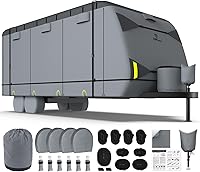
Choose a cover by RV type and measured dimensions, then use tie-downs only to secure a compatible cover. The products below include two fifth-wheel covers, a Class C cover, and a set of long securing straps.
The KING BIRD cover is sized for 33–37 ft fifth wheels. Its rollable zippered doors allow access to RV doors and engine areas, but its stated fit does not say it is designed for extended slide-outs.
The MOFEEZ cover is sized for 26–29 ft fifth wheels and includes 3 rollable zipper panels. Those panels allow access to the trailer; they do not mean the cover fits over extended slides.
The DikaSun cover is for 26–29 ft Class C motorhomes. Its adjustable tension panels and extra straps are intended to secure the cover, so confirm the cover’s width and slide guidance before using it with slides out.
The RV MURTS straps are 40 ft long and designed for lashing or securing covers. They are not for pulling or suspending a cover, and they cannot make an undersized cover fit.
How do you put a cover on an RV with slide-outs?
Follow the cover instructions and use the slide position they specify. If extended coverage is confirmed, protect sharp contact points and work slowly so fabric doesn't snag on hardware.
Keep the cover centered as you move it over the RV. Secure its straps as directed, then check that the fabric is not stretched tight across corners or loose enough to flap.
For a step-by-step process, see how to put a cover on an RV. Recheck the cover after installation and after strong wind, since movement can shift fabric against slide edges.
What should you do if the cover is too tight?
Stop if the cover strains across a slide or catches on an edge. Remove it carefully and verify the RV's measurements and the cover's fit instructions.
Don't use longer straps to compensate for a cover that is too small. Straps secure a cover that fits; added force can increase stress at seams and corners.
A different cover may be needed if the RV's extended width exceeds the cover's intended fit. For fifth-wheel options, compare fifth-wheel covers for winter storage.
What is the safest fit rule for an RV cover with slide-out?
Cover with slides retracted unless the cover maker confirms that the cover fits extended slides. If you need to keep them out, measure the full profile, verify the intended fit, and protect points where fabric could rub.
Pick a cover by RV type and measured size, then tension it only enough to keep it in place. If you can't confirm the extended fit, use the retracted position and review how RV covers work and moisture concerns before storage.
Frequently asked questions
Can you leave RV slide-outs extended under a cover?
Only if the cover is designed and sized to fit with the slides extended, and its instructions allow that setup. Measure the widest point with the slides out, including any awnings or trim, and check how the cover contacts the slide edges.
If the instructions assume retracted slides, bring them in before covering.
Should RV slide-outs be in or out when covering an RV?
Usually, retract the slide-outs before covering unless the cover's instructions say it fits extended slides. Retraction reduces the width and avoids stretching the cover across protruding corners.
Follow the RV and cover instructions, and don't force a cover over an extended slide.
How do you protect slide-out corners under an RV cover?
Use soft, secure padding over sharp corners or edges that could rub the fabric, if the cover instructions permit it. Keep the padding in place without creating a hard point, then check the fit and tension.
Avoid overtightening straps, which can pull fabric against corners.
How do you measure an RV for a cover with slide-outs?
Measure the RV at its widest point with the slide-outs in the position you plan to cover, then check length and height using the cover maker's instructions. Include fixed accessories that affect the outline.
Compare those measurements with the cover's stated fit range and allow for its intended shape.