How to Put a Cover on an RV, Step by Step
To put a cover on an RV, check the fit, clear the roof, unfold the cover, and pull it over the RV from front to back. Center it, close access panels, and tighten the straps enough to hold it in place without crushing the fabric.
On this page (7 sections)
- What should you check before putting a cover on an RV?
- How do you prepare the RV and cover?
- How do you pull the cover over the RV?
- How do you center and secure an RV cover?
- How can you reduce wind flap after installation?
- How do you check the fit after the cover is on?
- What is the safest way to put on an RV cover?
To put a cover on an RV, check the fit, clear the roof, unfold the cover, and pull it over the RV from front to back. Center it, close access panels, and tighten the straps enough to hold it in place without crushing the fabric.
A second person can help guide the cover and watch for snags, especially on a tall motorhome or a long trailer. Work in calm, dry weather when possible, and follow the cover's own instructions if they differ from these general steps.
What should you check before putting a cover on an RV?
Confirm the cover is made for your RV's type and measured length before you unpack it. Compare the cover's size range with your RV's full length and shape, including any fixed accessories the instructions tell you to include.
If you're still choosing a size or style, start with our guide to what makes the best RV cover. For larger motorhomes and fifth wheels, RV covers for big rigs can help you think through shape and clearance.
Close or retract slide-outs unless the cover is designed for them. Check the guidance in our RV cover and slide-out guide before pulling fabric across slide toppers, seals, or sharp corners.
Remove loose items from the roof and exterior, and secure doors, vents, and antennas as your RV manual directs. Don't climb onto a wet, icy, or unstable roof.
If you can't reach the roof safely from the ground or a stable platform, ask someone qualified to help.
How do you prepare the RV and cover?
Clean and dry the RV, then lay out the cover so you can find its front and rear. Dirt and grit trapped under fabric can rub against the finish as wind moves the cover.
Check the cover for tears, worn seams, or damaged buckles. If you find a small tear, pause and review how to patch an RV cover before installing it.
Unfold the cover on a clean surface and identify its front, rear, and access openings. Keep the fabric away from sharp gravel, tools, and rough edges while you work.
How do you pull the cover over the RV?
Start at the front, then move the cover toward the rear while keeping it centered. If the cover uses toss sticks or straps to reach the other side, use them as directed instead of throwing hardware by hand.
A helper can guide the opposite side and make sure fabric doesn't catch on mirrors, gutters, ladders, or other protrusions. Move slowly around corners, and don't pull hard against a snag.
Should you climb onto the roof to install an RV cover?
Use the ground or a stable platform when you can; climb onto the roof only if the RV maker says it's safe. Roof surfaces can be slippery or fragile, and a fall can cause serious injury.
Never walk on a roof that isn't designed to bear your weight. If the cover's instructions require roof access and you can't do that safely, arrange help from someone with the right equipment.
How do you center and secure an RV cover?
Center the cover from side to side and front to back before tightening any straps. Check that the hem sits evenly, access panels line up with doors, and the fabric isn't stretched tightly over a sharp edge.
Close zippers or fasten access panels as the cover instructions direct. Make sure vents and intended openings aren't blocked by a fold or strap.
Secure the cover's built-in straps in the order shown in its manual. Tighten them enough to reduce loose fabric, but avoid pulling so hard that seams, corners, or buckles take unnecessary strain.
When do extra tie-down straps help?
Extra straps can help if the cover's own system needs added support, but they must hold the cover without cutting into it. Check the cover maker's instructions first, and avoid routing straps across windows, fragile parts, or sharp edges.
The RV MURTS straps are 40 ft long, 1.5 in wide, and use adjustable cam buckles. They're intended for lashing and securing, not pulling or suspending.
Use them only where you can keep the strap flat and snug. Don't overtighten or use a strap to lift the RV or cover.
How can you reduce wind flap after installation?
Keep the cover centered and secure its designed straps so loose fabric has less room to move. Check the fit after the first gusty day and adjust any sections that have shifted.
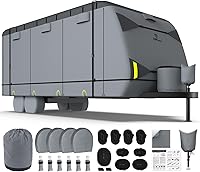
The RVMasking 34-37 ft cover has over-roof straps, a horizontal strap around the lower RV, elastic hems, and front and rear tension straps. Its reinforced patches are designed for corners, including higher patches at the rear ladder edges.
If you need a smaller cover, the Umbrauto 27-30 ft model includes pre-attached buckle straps and 2 extra windproof straps. It also has 6 vents to release moisture and reduce wind pressure.
Don't add a strap that pulls sharply across a seam or concentrates pressure on one point. For more on material and ventilation choices, read what RV cover fabric and fit to look for.
Are car-cover gust straps suitable for an RV cover?
A car-cover strap set may help with a small, specific fastening gap, but check that its clips are safe for your RV cover fabric. The Lucky Straps set has clips and 50 in bungee cords, and its stated vehicle fit is for cars.
Don't assume car-cover accessories are sized or designed for a large RV. Avoid attaching clips where they can tear the cover or scratch the RV.
How do you check the fit after the cover is on?
Walk around the RV and inspect the hems, corners, access panels, and straps before leaving it covered. Look for fabric caught on hardware, blocked vents, loose sections, and tight spots rubbing against edges.
Recheck the cover after strong wind or heavy rain, and make adjustments according to its instructions. A cover can shift as fabric settles, so an occasional check helps catch movement before it worsens.
If you're deciding whether the cover is suitable for your storage conditions, see whether RV covers work and whether an RV cover should be waterproof.
What is the safest way to put on an RV cover?
Choose a cover that fits, install it with the RV prepared, and secure it using the cover's own instructions. A helper can guide the fabric, but safe access to the roof matters more than finishing quickly.
Use the RVMasking or Umbrauto option when its length range matches your trailer. Consider the RV MURTS straps only if the cover needs a compatible extra tie-down, and use car-cover clips only where the cover maker allows them.
After storage, fold the cover cleanly and dry it as directed before putting it away. Our guide to folding an RV cover for next time walks through that step.
Frequently asked questions
Can one person put an RV cover on?
Yes, one person can put on some RV covers, but a helper can make it easier to keep the fabric centered and prevent it from dragging. Use the cover's instructions, stay off the roof unless it's safe and designed for access, and work in calm weather.
Should I wash my RV before covering it?
Clean off grit, leaves, and debris before covering the RV so they don't stay trapped against the finish. Let the exterior dry, and check for sharp edges or loose hardware that could rub the fabric.
Follow the RV and cover makers' cleaning instructions.
How tight should RV cover straps be?
Tighten the straps enough to limit flapping, while keeping the cover centered and avoiding excess pressure on seams or corners. Follow the cover's instructions for each strap.
Recheck the fit after wind or rain, since fabric and straps can shift.
Can I put an RV cover over slide-outs?
It depends on the cover's cut and the RV maker's guidance. Retract slide-outs unless the cover is specifically designed to fit over them, and check that the fabric won't snag on seals, corners, or accessories.
See our guide to RV covers with slide-outs for fit details.