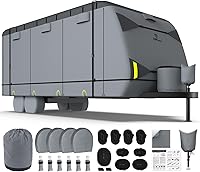
What Is the Best Material for an RV Cover?
The best material for an RV cover depends on your storage weather: breathable woven polypropylene suits damp, moderate climates, while coated Oxford or layered non-woven fabric may suit different needs. Match the fabric to your RV, climate, and fit.
On this page (6 sections)
The best material for an RV cover depends on your storage weather: breathable woven polypropylene suits moderate, damp climates, while coated Oxford or layered non-woven fabric offers other construction options. Choose by climate, fit, and the cover's airflow and reinforcement features.
A fabric label doesn't tell the whole story. A cover also needs to fit your RV and manage moisture and wind where you store it.
What is the best material for an RV cover?
For a moderate climate with high moisture, consider a cover designed for that setting, such as one with a breathable layered top and polypropylene sides. In other conditions, compare coated Oxford and layered non-woven options by their specific features.
“Polypropylene,” “Oxford,” and “non-woven” describe different materials or constructions. They don't guarantee that a cover will fit your RV, stay secure, or suit your local weather.
For any material, check the product's stated size range against your RV's body length and height. Then look for vents, straps, reinforced corners, and entry panels that fit how you store and access the vehicle.
Our guide to how the best RV covers compare on fabric, fit, and length explains how those choices work together.
How do polypropylene, Oxford, and non-woven fabrics differ?
Compare the actual cover design alongside the material name. A layered top, coating, vents, and reinforced corners can matter as much as the broad fabric category.
Is polypropylene a good RV cover material?
Polypropylene is one option for a cover designed for moderate climates with high moisture. The ADCO Designer Series Aqua Shed uses a triple-layer SFS AquaShed top panel and triple-layer polypropylene sides.
This model accommodates travel trailers 34 ft 1 in to 37 ft long, including slide-outs and ladders. Its built-in vents allow air to escape in moderate winds, and its front, rear, and bottom buckle system cinches slack.
Choose this type if your trailer fits the size range and your storage conditions match its intended climate. Measure the trailer before choosing a cover, and use the included gutter spout protectors to help guard against punctures.
What does Oxford fabric offer?
Oxford covers can pair a woven fabric with a coating and specific water-resistance features. The RVMasking 600D cover uses 600D Oxford fabric on top, 300D material on the sides, and a PU coating.
The cover is made for travel trailers 24 ft 1 in to 26 ft long. It also includes an extra-long horizontal strap, bottom straps, an elastic hem, front and rear tension panels, and six vents.
Those details make it worth comparing if you want a coated Oxford option with several wind-control features. Its stated size range is specific, so measure your trailer before deciding.
What does layered non-woven fabric offer?
Layered non-woven covers combine multiple fabric layers with other protective details. The RVMasking 9-layer option has a water-repellent outer coating, a breathable middle membrane, and reinforced patches at eight corners.
It fits travel trailers 24 to 26 ft long and includes an extra-long horizontal strap, bottom wind straps, an elastic hem, and front and rear tension panels. Eight vents are positioned on the sides and ends.
Consider it when you want layered non-woven construction and the trailer falls within its size range. As with any cover, check the dimensions and setup instructions before installation.
Does a waterproof RV cover need vents?
Vents can help air escape, but they don't remove the need to choose a well-fitting cover and manage moisture. Compare vent placement and the material's water resistance together.
“Waterproof” and “breathable” describe different properties. A cover may resist rain while also allowing some airflow through vents or a breathable layer.
The ADCO cover has built-in vents, the 600D Oxford cover has six, and the 9-layer cover has eight. The Classic Accessories PolyPRO3 has air vents and a thick triple-ply top, and its fabric is described as water resistant.
No material label alone guarantees that moisture won't collect under a cover. For more on airflow and damp storage, read whether RV covers work or trap moisture.
Does the best RV cover material change with the climate?
Yes, climate should shape your choice. A cover designed for moderate weather with high moisture may not be the right match for every storage location.
Start with the weather your RV will face: rain, snow, sun, or wind. Compare the cover's stated water resistance and UV protection, then check for vents, secure straps, and reinforcement where edges could rub.
The ADCO Aqua Shed is designed for moderate climates with high moisture. The Classic Accessories PolyPRO3 offers a thick triple-ply top for protection from rain, snow, dirt, and scratches, plus UV protection.
For strong sun exposure, compare the cover's UV protection and fit with our guide to RV covers for sun protection. If your main concern is rain, see what waterproof means for RV covers.
How does fit affect cover material?
A suitable fabric won't help if the cover is too loose, too tight, or made for the wrong RV shape. Match the size range to the trailer and check what the cover is designed to accommodate.
The Classic Accessories PolyPRO3 Deluxe fits travel trailers and toy haulers 22 to 24 ft long, with a stated height of 118 in from ground to roof. It's designed to fit the trailer body only.
Its zippered panels allow access to RV doors, while integrated straps and a toss bag system help with installation. Check your trailer dimensions and cover clearance before you choose this size.
A close fit helps limit loose fabric that can flap in wind. For more fit details, see our guide to choosing an RV cover by fabric, fit, and length.
Which material should you choose for your RV?
Choose by matching the construction to your climate, trailer size, and storage needs. Use the fabric type as a starting point, then compare the features that affect fit and airflow.
- Choose the ADCO Aqua Shed if you have a 34 ft 1 in to 37 ft trailer and want a cover designed for moderate, high-moisture climates.
- Choose Classic Accessories PolyPRO3 if your trailer is 22 to 24 ft and you want a triple-ply top with adjustable tension panels.
- Choose RVMasking 600D Oxford if your trailer is 24 ft 1 in to 26 ft and you prefer coated Oxford construction.
- Choose RVMasking 9-layer if your trailer is 24 to 26 ft and you want layered non-woven construction with eight reinforced corners.
Measure your RV before buying, and check that its shape and access points suit the cover. For most readers, the best material is the one whose construction fits both the local weather and the trailer, with vents and straps that support a snug setup.
Frequently asked questions
What is the best material for an RV cover?
There isn't one best fabric for every RV or climate. Woven polypropylene is one option for moderate, damp storage, while coated Oxford and layered non-woven covers offer different construction choices.
Compare breathability, water resistance, UV protection, fit, and the weather where you park.
Is Oxford fabric better than non-woven fabric for an RV cover?
Oxford and non-woven fabrics have different constructions, so the label alone doesn't settle which is better. Compare the specific cover's water resistance, UV protection, vents, reinforcements, and fit.
Also consider whether the fabric suits your storage climate and how often you'll need access to the RV.
Should an RV cover be waterproof or breathable?
Look for weather protection and a way for moisture to escape. Some covers pair water-resistant or water-repellent materials with vents or breathable layers.
No fabric choice makes fit and airflow irrelevant, so check the cover design and follow its setup instructions.
Does a thicker RV cover last longer?
Thickness alone doesn't guarantee longer life. Fabric construction, exposure, wind, fit, and contact with sharp edges all affect wear.
Look for reinforced areas and secure straps, then reduce rubbing and billowing by choosing the correct size and following the installation instructions.