Do RV Covers Work, or Do They Trap Moisture?
RV covers work best when they fit well, allow airflow, and are secured against wind. A cover can reduce exposure to sun, rain, and debris, but trapped dampness and rubbing can still cause problems.
On this page (8 sections)
- Do RV covers work?
- Can RV covers trap moisture and cause mildew?
- How does fit affect whether an RV cover works?
- What features help an RV cover protect without holding dampness?
- How should you secure a cover against wind?
- Which RV cover conditions can lead to damage?
- Should you cover an RV in winter?
- So, do RV covers work for your storage setup?
RV covers work best when they fit well, allow airflow, and are secured against wind. A cover can reduce exposure to sun, rain, and debris, but trapped dampness and rubbing can still cause problems.
The right choice depends on your storage conditions. A breathable cover with vents may help moisture escape, while a poor fit can billow, rub, or leave parts exposed.
Do RV covers work?
Yes, an RV cover can reduce exposure to sun, rain, snow, and debris while the RV is parked. How well it works depends on the fabric, fit, fastening, and weather where you store the RV.
A cover isn't a sealed shell. Water resistance varies, and ventilation matters because moisture can collect beneath fabric when the RV is damp or air can't move freely.
For a closer look at fabric choices, see what material is best for an RV cover. If you're comparing water protection, our guide to whether RV covers are waterproof explains the difference between water resistance and complete protection.
Can RV covers trap moisture and cause mildew?
They can trap moisture if the RV goes under cover while wet or damp air has too little room to escape. A cover does not cause mildew by itself, but stored moisture and limited airflow can create conditions where mildew may develop.
Wash and dry the RV before covering it, including roof areas and seams. Don't put a wet cover away for storage, and follow its care instructions after rain or snow.
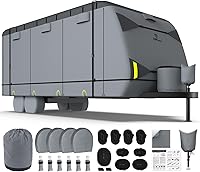
Look for vents and fabric described as breathable. The Umbrauto cover includes 6 air vents, and its fabric is described as lightweight and quick-drying.
Check beneath the cover after a wet spell or a thaw. If the RV remains damp, uncover it when conditions allow and let it dry before covering it again.
How does fit affect whether an RV cover works?
A close fit helps reduce billowing, but the cover should not be stretched over sharp corners or roof equipment. Measure the trailer and compare the result with the cover's stated size range before choosing.
Allow for the RV's actual shape, including ladders, air conditioners, and other fixed features. Follow the brand's measuring instructions, since cover sizing rules can differ.
The Umbrauto option fits travel trailers from 24 to 27 ft. ADCO's cover fits 31 ft 7 in to 34 ft and is designed to accommodate air conditioners, ladders, and slide-outs.
After installation, check that doors and access panels work as intended, and confirm that fabric isn't pressing hard against sharp edges. Recheck the fit after wind, since straps can loosen and fabric can shift.
For help with the setup, follow how to put a cover on an RV. If your trailer has slide-outs, see whether an RV cover can fit over slide-outs.
What features help an RV cover protect without holding dampness?
Look for a fit range that matches your RV, ventilation, and fabric suited to your climate. Straps, reinforced areas, and gutter protection can also help limit movement and reduce contact with vulnerable spots.
A breathable, water-resistant cover may suit a damp storage area better than choosing by the word “waterproof” alone. ADCO describes its Aqua Shed fabric as allowing air to pass while repelling water, and says the cover is designed for moderate climates with high moisture.
The Summates cover has a 4-layer top panel, single-layer sides, and a breathable, water-resistant design. Its stated use is short-term storage, so consider that when comparing it with a cover intended for longer storage.
Also check for vents, reinforced corners, and a way to secure the cover underneath. These details address airflow, wear, and movement, but they don't replace proper sizing or periodic checks.
How should you secure a cover against wind?
Use the cover's own straps and buckles as directed, then check for slack and rubbing. A loose cover can flap against the RV, while overtightening can strain the fabric or press it against sharp surfaces.
If you need extra tie-downs, the RV MURTS set contains two adjustable 40 ft straps with cam buckles. The straps are intended for lashing and securing covers, not for pulling or suspending loads.
Use only the tension needed to keep the cover in place. Inspect straps and contact points after strong wind, and replace or repair damaged cover material before the next storage period.
Which RV cover conditions can lead to damage?
Poor fit, trapped moisture, and repeated rubbing are common problems to prevent. A cover can't compensate for an RV that is stored wet or for fabric that moves freely in wind.
Before covering, dry the RV and protect protruding edges with the cover's supplied protectors where available. Keep the fabric clear of sharp corners, then inspect the roof and sides during storage.
A cover may also collect water or debris in low areas if it sags. Check it after storms and clear buildup according to the cover's care instructions.
Should you cover an RV in winter?
Covering can help limit exposure during winter storage, but it works best with a dry RV, a suitable cover, and regular checks. Snow, wind, and freeze-thaw cycles can affect both the cover and the RV beneath it.
Choose a size and fabric that suit your trailer and storage conditions. Our guide to whether you should cover your RV in winter walks through the decision.
So, do RV covers work for your storage setup?
Choose an RV cover if you can match its size to your trailer, secure it, and check for dampness during storage. For a humid location, consider a breathable cover with vents; for windy conditions, pay close attention to fit and fastening.
The Umbrauto cover has 6 vents and a 24 to 27 ft fit range. ADCO's Aqua Shed option is sized for longer trailers and designed for moderate, high-moisture climates.
Compare fabrics in the RV cover material guide and fit tips in our RV cover setup guide before choosing.
Frequently asked questions
Do RV covers cause mildew?
An RV cover can contribute to mildew if moisture stays trapped against the exterior, especially when the RV or cover is damp before storage. Dry the RV first, use a breathable cover with vents, and check underneath after rain or a thaw.
Remove the cover if you find persistent dampness.
Should an RV cover be tight or loose?
An RV cover should fit close enough to limit billowing, but it shouldn't be stretched tightly over sharp edges or roof equipment. Use the cover's straps and protectors as directed, then check for rubbing points after windy weather.
A size that matches the measured RV helps avoid excess fabric.
Can you cover an RV in a humid climate?
Yes, but choose a cover made for the storage conditions and allow airflow around the RV. A breathable design with vents can help moisture escape, though it doesn't replace drying the RV or checking it during storage.
Follow the cover maker's fit and care instructions.
Does a waterproof RV cover prevent all water damage?
No. Water resistance or a waterproof fabric can reduce exposure, but seams, fit, wind-driven rain, and trapped condensation still matter.
Check how the cover is designed for your climate, secure it to limit movement, and inspect the RV periodically while it's covered.