How to Patch a Torn RV Cover
To repair an RV cover, clean and dry the area, then apply a compatible patch that extends beyond the tear. Use a patch made for the cover fabric and location, and replace the cover if damage is widespread.
On this page (7 sections)
- How do you repair an RV cover tear?
- What should you check before choosing a repair patch?
- Which RV cover repair patch kit fits your damage?
- How do you stop a small tear from getting worse?
- When should you replace a damaged RV cover?
- How can you help a patched cover last?
- Which repair option should you choose?
To repair an RV cover, clean and dry the damaged area, then apply a compatible patch that extends beyond the tear. Match the repair to the cover fabric and location, and replace the cover if damage is widespread.
A small hole can let water, dust, and sun reach the RV. A careful patch can help extend the cover's use, but it can't restore fabric that's worn thin across a large area.
How do you repair an RV cover tear?
Clean the area, let it dry fully, and patch across sound fabric on every side of the tear. Follow the patch instructions for application and curing, since adhesives and cover materials differ.
- Remove the cover if you can do so without stretching the tear.
- Brush away loose dirt and let the fabric dry.
- Check the front and back of the damaged spot.
- Choose a patch made for the cover fabric and the tear's location.
- Apply it so it reaches beyond the tear onto intact material.
- Let the adhesive set as directed before handling or reinstalling the cover.
If the tear sits near a seam, zipper, strap, or corner, check the surrounding area for more damage. A patch over weak fabric may peel or tear again under tension.
What should you check before choosing a repair patch?
Identify the cover material and where the tear sits before choosing a patch. A top panel may need a different repair product from a side panel, and a general fabric tape may not suit every cover.
Look for fraying, brittle spots, thinning, seam separation, and damage around straps or openings. Also check whether the tear has sharp edges that could keep spreading when the cover moves.
The cover's fit matters after the repair. A cover pulled too tight can put pressure on a patched area, so review how to put a cover on an RV if you need to adjust installation.
Does the tear location change how you repair it?
Yes, a top-panel tear and a side-panel tear may call for different patch choices. Use a product intended for that cover area when its fit and material match.
The Camco ULTRAGuard RV Cover Patch Kit is designed for tears and holes in the top panel of Camco ULTRAGuard covers. It measures 9 x 72 in and uses a peel-and-stick application.
For a cover from another brand, check that the patch is suitable before applying it. Camco describes this kit for its ULTRAGuard cover top panel, so don't assume the adhesive will suit every fabric.
Which RV cover repair patch kit fits your damage?
Choose a kit based on the cover brand, repair area, and patch size. A kit intended for a specific cover line can be a closer match, while a universal kit offers different adhesive-backed fabric colors.
ADCO's Universal RV Cover Patch Kit is described for reinforcement and repairs with virtually every brand of RV cover. It includes 6 different colored adhesive-backed fabrics and measures 36 x 8.25 in.
A color choice can make a patch less noticeable, but fit and fabric compatibility matter more. Use the kit's instructions and choose a section of sound fabric that extends around the tear.
Can canvas repair tape fix an RV cover?
Canvas repair tape may suit a compatible fabric cover when the damaged area is small and the surface is sound. Confirm the cover material and follow the tape's application directions.
KING MOUNTAIN Canvas Repair Tape is charcoal gray, self-adhesive canvas tape measuring 4 x 63 in. The maker describes it for several fabric items, including outdoor gear, tents, and awnings.
This tape is described as canvas repair tape, so it may not be the right match for every nonwoven RV cover. Check a hidden area first if you are unsure how the adhesive will affect the fabric.
How do you stop a small tear from getting worse?
Reduce tension on the damaged area before patching it. A patch works best when it can attach to sound fabric rather than being stretched across a tight, moving tear.
Don't pull the cover hard while cleaning or applying the patch. If you must work with the cover installed, support the fabric from underneath and avoid pressing against RV edges or sharp hardware.
After the repair sets, reinstall the cover without forcing it. Keep straps snug enough to secure the cover, but check that they aren't pulling directly across the patch.
For other care questions, see whether RV covers work or trap moisture. Moisture and movement can affect how you store and maintain a cover.
When should you replace a damaged RV cover?
Replace it when the fabric has widespread wear, several tears, or weak seams and attachment points. A patch needs sturdy fabric around the damage to hold.
A new cover may also make sense if repeated repairs are needed or the current cover no longer fits well. Compare materials and fit in our guide to the best material for an RV cover, then measure carefully before choosing a replacement.
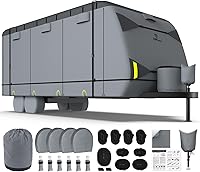
The RVMasking 26-28 ft 9-Layer Travel Trailer Cover is sized for travel trailers from 26 ft 1 in to 28 ft 6 in. Its included accessories list a repair patch for minor tears.
The listed size range is only useful if it matches your trailer's measurements. Check length and the cover's fit instructions before choosing it.
How can you help a patched cover last?
Keep the cover fitted without excess strain, and inspect repaired areas when you remove it. Catching a loose edge early gives you a chance to address it before the tear spreads.
Fold and store the cover dry, away from sharp tools and hardware. Our guide on how to fold an RV cover explains a storage approach that can help limit tangles and snags.
Which repair option should you choose?
Choose a cover-specific patch when its intended panel and cover type match your damage. Consider a universal RV cover kit when you need several adhesive-backed fabric colors, or canvas repair tape when the cover material is compatible.
Patch only when sound fabric surrounds the tear. If the cover is worn across several areas or its seams are failing, compare replacement materials and fit before putting more repairs onto weak fabric.
Frequently asked questions
Can you patch a torn RV cover?
Yes, a small tear or hole can often be patched if the surrounding fabric is clean, dry, and still sound. Choose a repair patch intended for RV covers or a compatible fabric repair tape, and extend it beyond the damaged area.
If the fabric is brittle, fraying, or torn in many places, a patch may not hold.
How do you repair a hole in an RV cover?
Clean and fully dry the fabric around the hole, then apply a compatible adhesive patch that covers the opening and reaches onto sound material. Follow the patch maker's instructions for placement and pressure.
Check the repair after it sets, and avoid pulling the cover tight across the patch.
Can you use tape to fix an RV cover?
Fabric repair tape can be an option when its material and adhesive suit the cover fabric and the tear is small. Clean and dry the surface first, round the tape corners if its instructions allow, and press it onto sound fabric around the damage.
Test a hidden spot if compatibility is uncertain.
When should you replace an RV cover instead of patching it?
Replace the cover when fabric is brittle, badly worn, or damaged in several areas, or when seams and attachment points are failing. A patch needs sound fabric around the tear to hold.
Compare the cover's condition and fit with guidance on how RV covers work.