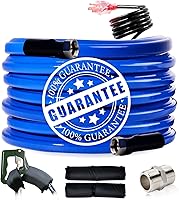
Kohree 25-Foot Heated Water Hose Review: Worth It? (October 2026)
The Kohree 25 ft heated water hose suits RV hookups that need a 25 ft reach and a hose rated for freeze protection down to -40°F. Its thermostat-controlled 120V heating cable and lead-free certification are useful features, but the temperature rating is a manufacturer claim, not a guarantee for every setup.
On this page (6 sections)
The Kohree 25 ft heated water hose is a reasonable fit for an RV hookup that needs 25 ft of reach and a manufacturer-stated freeze-protection rating down to -40°F. Its 120V thermostat-controlled heating cable, LED indicator plug and NSF/ANSI/CAN 372 lead-free certification are the main points to weigh.
The key trade-off is that a temperature rating is not a guarantee for every installation. Measure your route, confirm the power connection and follow the hose instructions before relying on it in cold weather.
The Kohree 25 ft heated water hose at a glance
The Kohree hose combines a 25 ft length with a 120V thermostat-controlled heating cable. Kohree says it provides freeze protection down to -40°F and meets NSF/ANSI/CAN 372 lead-free standards.
Kohree 25 ft Heated Water Hose -40F: Best for a 25 ft RV hookup

- 25 ft length
- 120V AC heating cable
- Thermostat-controlled heating
- NSF/ANSI/CAN 372 lead-free certification
A 25 ft option for an RV hookup where the reach fits and a thermostat-controlled cable is preferred. Kohree says it provides freeze protection down to -40°F.
Pros
- Thermostat-controlled heating cable
- NSF/ANSI/CAN 372 lead-free certification
- Aluminum fittings on both ends
- LED indicator plug
Cons
- Requires a 120V AC connection
- 25 ft may be too short or too long for some hookups
- The -40°F figure is a manufacturer claim
The hose has aluminum fittings at both ends, rubber grips and an LED indicator plug. Kohree also describes its outer jacket as weather resistant and says the hose is designed to resist abrasion, cracking and UV damage.
Those details help you compare the connection, power and length with your campsite. They don't tell you whether the hose will suit every weather exposure or hookup, so use the maker's instructions for your own setup.
What does the -40°F rating mean?
Kohree states that the hose provides freeze protection down to -40°F (-40°C). Treat that as the brand's stated rating and check its instructions for operating conditions, placement and connection requirements.
A heated hose still needs a working power connection. The thermostat controls the heating cable, but the temperature figure alone doesn't account for your entire water system, including exposed fittings and RV plumbing.
Is 25 ft the right length for your RV hookup?
A 25 ft hose fits best when the measured route from the water source to your RV inlet needs roughly that much hose. Measure the path the hose will actually follow, including turns, distance around obstacles and slack at both ends.
A hose that is too short can put strain on the connections. Extra length can also leave more hose to position, so don't assume that longer is automatically more useful.
The Kohree 15 ft heated water hose is a shorter option in the same range. For a longer route, compare the best 50 ft heated water hoses for RVs and check the connection path before settling on a size.
| Detail | Kohree 25 ft hose |
|---|---|
| Length | 25 ft |
| Freeze protection | Down to -40°F, per Kohree |
| Power | 120V AC |
| Heating control | Thermostat-controlled cable |
| Indicator | LED indicator plug |
| Fittings | Aluminum, both ends |
| Drinking-water claim | NSF/ANSI/CAN 372 lead-free certification |
| Warranty | 1 year |
What should you check before connecting it?
Check that the hose reaches the water source without pulling on either connection, and confirm you have a suitable 120V AC power source. Kohree describes the connections as tool-free and says rubber grips help with handling.
Kohree says the hose is independently tested to meet NSF/ANSI/CAN 372 lead-free standards. You can read about the standard at the NSF page for NSF/ANSI/CAN 372.
Route the hose so it isn't sharply bent or stretched across a walkway. Use the supplied instructions for installation and electrical connection, and check the plug's LED indicator as Kohree directs.
For additional setup steps, see how to use a heated water hose on your RV. That guide covers practical connection and placement decisions alongside this product review.
How does the Kohree compare with alternatives?
The Kohree is the 25 ft, -40°F-rated option among these choices, while each alternative has a different length or stated temperature rating. The ratings come from the respective brands, so compare them alongside your needed reach and connection requirements.
Kohree 15 ft Heated Water Hose -40F: Best for a short hookup

- 15 ft length
- 120V AC heating cable
- Thermostat-controlled heating
- NSF/ANSI/CAN 372 lead-free certification
A shorter Kohree hose for a close water connection where 15 ft reaches without leaving much extra hose. It shares the 120V thermostat-controlled heating and lead-free certification.
Pros
- Shorter length for a close connection
- Thermostat-controlled heating cable
- NSF/ANSI/CAN 372 lead-free certification
- 450 psi maximum pressure
Cons
- May not reach a distant water source
- Requires a 120V AC connection
- The -40°F figure is a manufacturer claim
The 15 ft Kohree shares the stated -40°F rating, thermostat control, 120V operation and lead-free certification. Its shorter length may suit a nearby water source, but measure before choosing it.
RVGUARD 25 ft Heated Water Hose -20F: Best for a stated thermostat range

- 25 ft length
- 120V heated hose
- Thermostat turns on at about 47°F and off at about 60°F
- Lead and BPA free
A 25 ft alternative with a stated thermostat turn-on and turn-off range. RVGUARD says the hose provides freeze protection down to -20°F.
Pros
- Thermostat turn-on and turn-off temperatures are stated
- Lead and BPA free
- Stainless steel connectors
- Includes a 3/4 in GHT adapter
Cons
- Lower stated freeze-protection temperature than the Kohree hoses
- The -20°F figure is a manufacturer claim
- Requires power for the heating cable
RVGUARD's 25 ft hose has a lower stated freeze-protection temperature of -20°F. RVGUARD gives a thermostat turn-on temperature of about 47°F and turn-off temperature of about 60°F, which makes its control range easier to compare on paper.
REHOSEUP 30 ft Heated Water Hose, -45F: Best for extra reach

- 30 ft length
- Self-regulating external thermostat
- Manufacturer states protection to -45°F
- 700 psi maximum pressure
A longer option for hookups that need more reach than 25 ft. REHOSEUP describes its hose as freeze-protected down to -45°F.
Pros
- 30 ft length
- Self-regulating external thermostat
- 700 psi maximum pressure
- 3-year service stated by REHOSEUP
Cons
- Longer than a close hookup may need
- The -45°F figure is a manufacturer claim
- Confirm the route and power connection before choosing
The 30 ft REHOSEUP gives you 5 ft more reach than the Kohree and has a manufacturer-stated -45°F rating. Its longer length may help when the water source is farther away, while a close hookup may not need the extra hose.
How do you reduce freezing risk around the hose?
A heated hose is one part of a winter water setup, so check the exposed connections and the RV plumbing as well. Protecting the hose doesn't automatically protect pipes inside or beneath the vehicle.
The guide to keeping an RV water hose from freezing covers additional ways to reduce exposure. For broader campsite planning, how to keep RV pipes from freezing explains why the rest of the water path matters too.
Use the temperatures and steps in the product instructions. If your conditions are colder than the stated rating or your connection differs from the intended setup, ask Kohree for guidance before depending on the hose.
Who should choose the Kohree 25 ft hose?
Choose the Kohree if 25 ft reaches your hookup, 120V power is available and its stated features match your needs. Its thermostat control, indicator plug, aluminum fittings and lead-free certification give you concrete points to compare with other heated hoses.
Pick the 15 ft Kohree when a shorter run is enough. Consider the 30 ft REHOSEUP if you need extra reach, or the RVGUARD if its stated thermostat range is useful to your comparison.
Before buying, measure the route and confirm where the hose and power cord will sit. For more brand comparisons, read the Camco 50 ft heated water hose review.
Our score weighs specs, features and buyer feedback against what you're shopping for.
Frequently asked questions
Does the Kohree 25 ft heated water hose protect to -40°F?
Kohree states that the 25 ft hose provides freeze protection down to -40°F. That is the brand's stated rating, not a promise for every installation; power, connection details and exposure can affect how a hose performs.
Follow Kohree's instructions and check that your setup matches the hose's requirements.
Is the Kohree heated water hose safe for drinking water?
Kohree says the hose is independently tested to meet NSF/ANSI/CAN 372 lead-free standards. That certification addresses lead content, so it is useful when choosing a drinking-water hose.
Follow the care and connection instructions, and contact Kohree if you need details about other material or water-quality questions.
What length Kohree heated water hose should I choose?
Choose 15 ft for a close water connection and 25 ft when the hookup needs more reach. Measure the route between the water source and RV inlet, including bends and room to connect both ends.
Avoid choosing by straight-line distance alone, since the hose needs enough slack to sit without strain.
Does the Kohree 25 ft hose need electricity?
Yes. The Kohree hose uses a 120V AC heating cable, and its thermostat controls when the cable activates as temperatures fall.
Check that you have an appropriate power source at the hookup and follow the hose instructions for connecting it.
The hose's LED indicator plug helps monitor its electrical connection.