How to Keep RV Pipes From Freezing at the Campsite
To keep RV pipes from freezing at the campsite, protect exposed water lines, keep heat inside the underbelly, and check tanks and connections during cold spells. Use equipment rated for your setup and follow its installation instructions.
On this page (8 sections)
- How do you keep RV pipes from freezing at a campsite?
- Which parts of an RV water system freeze first?
- Does a heated water hose protect RV pipes?
- When does pipe heating cable help?
- Can skirting help protect plumbing below the RV?
- Do tank heater pads protect RV pipes?
- What should you check during a cold night?
- Which freeze protection should you choose?
To keep RV pipes from freezing at the campsite, protect exposed water lines, keep heat inside the underbody, and check tanks and connections during cold spells. Match each measure to the part of the water system it protects, and follow your RV and equipment instructions.
A heated water hose protects the campground connection. Pipe heat cable is for compatible pipes, skirting reduces exposure beneath the RV, and tank pads address tanks when the setup calls for them.
How do you keep RV pipes from freezing at a campsite?
Start with the exposed hose and pipes, then protect the underbody and tanks. A single heated hose won't protect plumbing inside the RV, and skirting alone won't warm a hose left outside.
- Find the exposed hose, water inlet, valves, low points, and tanks.
- Check the weather and the RV manual for cold-weather operating limits.
- Protect the water connection with a suitable heated hose or approved insulation.
- Use pipe heating cable only on compatible pipes and as its instructions allow.
- Reduce wind exposure under the RV with suitable skirting if it fits your setup.
- Check the system regularly for power, leaks, and signs of freezing.
Keep water flowing only if your RV and campground guidance allow it. A running tap can use a lot of water and may leave other parts of the system unprotected.
Which parts of an RV water system freeze first?
Exposed connections and lines are often the first places to check because wind and cold can reach them directly. The exact risk depends on the RV's layout, insulation, power, and the temperature.
Look around the campground spigot, hose, RV inlet, and any water line hanging below the body. Check low points and valves, too; a protected tank doesn't mean every connecting line is protected.
Identify which tanks hold fresh, gray, or black water and where their plumbing runs. If you're unsure what a tank heater can cover, our guide to how RV holding tank heaters work explains the role of tank pads.
Does a heated water hose protect RV pipes?
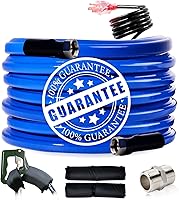
A heated water hose protects the water connection between the campground supply and the RV. It doesn't heat the RV's internal pipes or tanks, so treat it as one piece of the winter plan.
The REHOSEUP hose is 30 ft long and has a self-regulating external thermostat. REHOSEUP describes it as intended to help prevent freezing down to -45°F.
Measure the route from the spigot to the RV inlet before choosing a length. Keep the hose and power connection installed as directed, and check for leaks at both ends after connecting.
For more on choosing and using a heated connection, read how to keep an RV water hose from freezing. A heated hose is not a substitute for protecting plumbing elsewhere on the rig.
When does pipe heating cable help?
Pipe heating cable can help protect compatible water pipes where the cable can be installed as directed. Check that the specific cable suits the pipe material and location before using it.
JDZKOMKE's 50 ft cable is described for water-filled metal and plastic pipes, including copper, PVC, and PEX. Its instructions warn against use on fuel lines and gutters, and say the pipe must contain water.
Route the cable only as its instructions allow, with the required spacing and electrical protection. Don't guess about wrapping or overlapping; incorrect installation can create a hazard or leave part of the pipe unprotected.
For a comparison of cable types and their uses, see heat tape vs. heat cable for RV water lines. If you need a longer-term insulation plan, how to insulate an RV for winter covers other ways to limit heat loss.
Can skirting help protect plumbing below the RV?
RV skirting can reduce wind exposure and help hold warmer air beneath the vehicle. It may support freeze protection, but it doesn't replace heat for an exposed hose or a vulnerable pipe.
STABYLIS skirting uses a polyester upper section and stainless steel mesh at the bottom. The maker gives a sizing method of adding RV length and width, then multiplying by 2; check the fit and height options for your rig.
Make sure the skirting fits around the vehicle and campground surface without blocking access you need. Recheck it after wind or weather changes, and don't assume the enclosed space will stay warm without a heat source.
Our guide to best RV skirting for winter covers what to consider when choosing a setup. For broader cold-weather planning, see how to keep an RV warm in winter.
Do tank heater pads protect RV pipes?
Tank heater pads are meant to warm compatible tanks, not every pipe connected to them. Check the tank material, power system, and pad instructions before installation.
The JIANBENKJ set contains 3 pads sized 12 x 18 in. The maker describes them for tanks up to 50 gallons and says they are for 12V or 13.5V systems, not 24V or 48V.
The maker says the thermostat turns on at about 45°F and off at about 68°F, with stated tolerances of 5 degrees. It also says a tank should contain water while a pad is operating and that the pads should be powered off when not used for a long time.
If tank protection is the main concern, read how RV holding tank heaters work before deciding whether pads suit your rig. They don't replace protection for exposed valves, pipes, or a campground hose.
What should you check during a cold night?
Check that power is on and the water system is behaving normally. Inspect the hose, connections, and exposed plumbing for leaks, unusual bulging, or loss of flow.
Keep cords and plugs positioned as the product instructions require and away from standing water. Don't open a frozen line with a torch or other direct flame; shut off water if a pipe appears damaged and consult a qualified RV service professional.
Know where the water shutoff is before you need it. If flow drops, avoid forcing valves or fittings, and follow your RV manual's steps for a suspected freeze.
Which freeze protection should you choose?
For a campground connection, choose a heated hose sized for the route and the available power. For compatible exposed pipes, consider pipe cable only when its installation directions match the line.
Choose skirting when wind exposure beneath the RV is part of the problem, and tank pads only when the tanks, voltage, and installation suit them. Review how to use a heated water hose on an RV for connection guidance.
Protect each exposed part of the system, check the setup during cold weather, and use the RV manual as the guide for operating limits. That layered approach gives you a clearer plan than relying on one heater or cover.
Frequently asked questions
What is the best way to keep RV pipes from freezing?
Protect the exposed water connection, insulate or heat vulnerable pipes as their materials and installation allow, and keep the RV's underbody warmer with skirting when appropriate. Check the forecast and inspect connections during cold weather.
No single measure guarantees protection in every temperature or RV layout.
Should I leave water running in my RV to keep pipes from freezing?
A small flow may reduce freezing risk in some plumbing, but it can waste water and may not protect every line, tank, or connection. Follow campground rules and your RV manual, and use appropriate insulation or heat protection.
Don't rely on a running faucet as your only freeze plan.
Can RV pipe heating cable touch plastic pipe?
Some heating cables are designed for both metal and plastic pipes, but compatibility and installation rules vary by cable. Check the cable instructions and the pipe material before use, and follow spacing and insulation directions.
Never apply a cable to a line or surface the manufacturer excludes.
Does RV skirting keep pipes from freezing?
Skirting can help reduce wind exposure and hold warmer air beneath an RV, but it doesn't create heat by itself. It works best as one part of a plan that also addresses exposed hoses, water lines, tanks, and the weather expected at the campsite.