How Long Does a Camper Cover Last?
Most camper covers last 3 to 7 years. A lightweight cover left in full sun may fail in 2 to 3 years, while a thicker multi-layer cover stored indoors between trips often reaches 6 to 7 years.
On this page (8 sections)
- How long does a camper cover last on average?
- What makes a camper cover wear out?
- Does cover material decide how long it lasts?
- How does sun exposure change camper cover lifespan?
- How does storage between trips affect how long a camper cover lasts?
- When should you patch a camper cover and when replace it?
- Which camper covers tend to last longer?
- How do you get the longest life from a camper cover?
Most camper covers last 3 to 7 years, and the gap between those numbers comes down to fabric, sun and how you store it. A cover that sits in full sun year-round will wear out sooner than one that spends the off-season folded in a garage.
The question of how long a camper cover lasts comes up most when a cover starts to fade or a small tear appears at the roof edge. That is usually the point where you decide between a patch, a replacement or a different fabric type.
How long does a camper cover last on average?
Plan on 3 to 5 years for a typical cover kept outside. A camper cover spends its life in the worst conditions a fabric can face: sun, rain, wind and grit, all at once.
A basic single-layer cover often reaches 2 to 3 years before the top panel starts to break down. A multi-layer cover with a UV-rated top tends to hold its water resistance longer and often runs 5 to 7 years with care.
The number also depends on where you park. A trailer under trees or a carport gets far less direct sun than one in an open storage lot, and that difference alone can add a couple of years to the same cover.
Treat any lifespan figure as a range, not a promise. The fabric is only part of the system; the fit, the straps and how you treat the cover between trips all affect how long it stays useful.
What makes a camper cover wear out?
Sun is the main cause, followed by wind flap and trapped moisture. Fabric fails from the outside in, and each of these three speeds up the others.
UV light breaks down the outer layer first. You'll notice fading, then a chalky or sticky feel, and then the fabric starts to lose its water repellency.
Wind does a different kind of damage. A loose cover moves against the camper and against itself, and repeated flapping wears seams and strap anchors until they tear.
Moisture is the quiet one. A cover that can't breathe traps damp air under the fabric, which can lead to mildew on the cover and moisture against the camper's finish.
Vents and breathable layers are what prevent this.
UV damage and fabric aging
A cover with a high UPF rating resists sun damage longer than a plain woven fabric. The Umbrauto cover, for example, uses an upgraded UPF50+ top layer to slow the aging that sun causes.
That rating matters most in the Sun Belt and in open storage. A cover in Arizona or Florida will always age faster than the same cover in the Pacific Northwest, so weigh UV protection against your local climate.
Wind flap and seam failure
A tight fit is what stops wind from getting under the cover. That is why covers with extra straps and a snug hem outlast loose ones that billow in a storm.
The RVMasking cover adds an extra-long horizontal strap that wraps under the RV, along with front and rear tension panels. That design keeps the fabric from lifting in gusts.
Does cover material decide how long it lasts?
Yes, fabric and layer count are the biggest predictors of lifespan. A 9-layer non-woven top resists tears and UV better than a thin single-layer cover.
Non-woven fabric is the common choice for camper covers. It's light, packs small and blocks water when it's new, but the outer layer is what takes the UV hit, so a thicker build with a treated top surface lasts longer.
Look at what the maker says about the top panel specifically. The Umbrauto 27-30 ft cover uses a bi-component 9-layer top that Umbrauto says boosts tear resistance by 30% over its older fabric, and that kind of upgrade is what stretches the years.
Fit matters as much as fabric. A cover that's too big flaps and a cover that's too tight strains at the seams, so match the size range to your trailer's length.
How does sun exposure change camper cover lifespan?
A cover in full sun loses years compared with one in shade. Direct UV is the single biggest factor in how fast the top panel breaks down.
If your camper sits in an open lot, choose a cover with a stated UV rating and check the top panel each spring. A cover that still beads water and feels firm is fine; one that's chalky and soft is near the end.
Shade helps more than most people expect. A carport, a tree line or a north-facing wall cuts the UV dose and can add 2 to 3 years to the same cover.
For open storage, compare covers built for sun in our guide to RV covers for sun protection.
The fabric type you choose should match the exposure. A sun-rated cover costs more up front but tends to last longer in the open than a budget cover replaced every other season.
How does storage between trips affect how long a camper cover lasts?
Dry, folded storage is the easiest way to add years. A cover left bundled wet or crumpled in a bin grows mildew and weakens at the folds.
Clean the cover before storage. Dirt and bird droppings hold moisture and grit that abrades the fabric, so a rinse and full dry is worth the time.
Fold it loosely rather than stuffing it into a bag.
Keep it out of UV light while stored. A shelf in a garage or shed beats a clear bin in the sun, and a dark, dry spot prevents mildew between seasons.
Check the cover before each season. Look at the top panel, seams and strap anchors, and patch small holes before they grow.
That one habit is what separates a cover that lasts 7 years from one that fails in year 4.
When should you patch a camper cover and when replace it?
Patch small holes and thin spots; replace a cover once water passes through the top panel. Patching buys time, but it can't restore worn-out fabric.
A patch kit suits tears, punctures and worn spots on the top panel. The Camco ULTRAGuard patch kit is a peel-and-stick strip that measures 9 by 72 inches, sized for long tears or several small holes.
Clean and dry the area first, then press the patch down firmly. It works best on flat sections of the top panel, not on a seam that's pulling apart.
Replace the cover instead when the fabric feels thin across a wide area, water soaks through, or several seams have failed. A cover that's failing at many points costs more in patches than a new one.
Which camper covers tend to last longer?
Covers with a thick UV-rated top, vents and a snug strap system last longest. Those three features address sun, moisture and wind, the three things that end a cover's life.
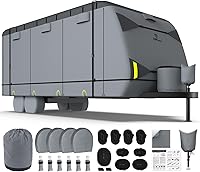
The Umbrauto 27-30 ft 9-Layer Travel Trailer Cover is the strongest pick for long-term outdoor storage. Its 9-layer top carries UPF50+ protection and Umbrauto says it improves waterproofing by 15% over the older version.
Six vents release moisture and wind pressure, and it comes with two extra windproof straps plus a tongue jack cover and gutter covers. Umbrauto backs it with a 3-year manufacturer warranty.
The RVMasking 26-28 ft 9-Layer Travel Trailer Cover is the pick when wind is your main worry. It adds an extra-long horizontal strap under the RV, reinforced patches on eight corners and a rear zipper panel.
The package includes four tire covers, a propane tank cover and a repair patch. If you want the full breakdown, our RVMasking RV cover review covers its fit and features in detail.
For smaller trailers, the same fabric logic applies. Pop-up campers and teardrops have their own fit needs, so compare pop up camper covers and teardrop camper covers when you size one.
How do you get the longest life from a camper cover?
Start with the right fit and UV rating, then keep the cover tight, clean and dry. Those habits matter more than any single feature.
Measure your camper's length before you buy and pick a cover whose range covers it. Check the top panel rating, the vent count and the strap system, then install it snug with the buckles tight.
Patch small damage the same season you spot it. Wash and dry the cover before storage, and keep it out of sun when it's not on the camper.
Recheck the straps after winter storms.
If you're buying your first cover or replacing a worn one, weigh UV protection first if the camper sits in the open. The answer to how long a camper cover lasts is really a question of how much sun and wind you can keep off it.
Pick a UV-rated multi-layer cover, keep it tight and store it dry, and you'll land at the top of the 3 to 7 year range rather than the bottom.
Frequently asked questions
How long does a camper cover last in full sun?
Expect 2 to 4 years when the cover sits in direct sun all season. UV breaks down the outer layer first, so you'll see fading, then a chalky surface, then small tears along the roof line.
How do you know a camper cover needs replacing?
Replace it when water soaks through the top, the fabric rips at a seam you can't patch, or the straps and buckles fail. A cover that stays wet underneath can trap moisture against your camper, which is worse than no cover.
Does a camper cover last longer on a stored trailer?
Yes. A cover on a camper kept indoors or under a carport sees far less UV and wind, so the fabric holds up longer.
A cover on a trailer parked outside in the open ages faster, whatever the brand.
Is a heavier camper cover always longer lasting?
Not always. Layer count and fabric quality matter more than weight alone.
A thick cover that traps moisture can cause problems, so buy one with vents and breathable fabric as well as UV protection.