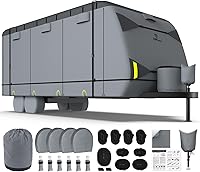
How to Measure for a Camper Cover
To measure for a camper cover, take the length from bumper to bumper, the width at the widest point, and the height from the ground to the highest roof point. Then compare those three numbers against the cover maker's size chart and round up to the next size if you're between two.
On this page (10 sections)
- What three measurements does a camper cover need?
- How do you measure camper length correctly?
- How do you measure camper width?
- How do you measure camper height?
- Where do you take the tape on different camper types?
- How do you match your numbers to a cover size?
- What do you do when the cover doesn't fit perfectly?
- How do you keep a measured cover in place?
- What mistakes should you avoid when measuring?
- The short version for measuring a camper cover
To measure for a camper cover, take the length from bumper to bumper, the width at the widest point, and the height from the ground to the highest roof point. Then compare those three numbers against the cover maker's size chart and round up to the next size if you're between two.
Getting the camper cover measurement right the first time saves you a return and a second trip up the ladder. The job takes about 20 minutes with a tape and a helper.
Do it on a calm day when the fabric won't fight you.
What three measurements does a camper cover need?
Length, width and height are the three numbers that matter for a camper cover size. Every size chart is built around them, so write each one down in inches and keep the paper with the camper's paperwork.
Length is the longest dimension and the one most size charts sort by first. Width covers the body plus any slide-out or awning rail that stays out.
Height runs from the ground to the tallest point, since the cover wraps down the sides to the base.
Some makers also ask for the tongue or hitch length on travel trailers. Read the size chart's footnotes before you start, so you don't have to measure twice.
Our guide to pop up camper covers shows how those smaller units are sized.
How do you measure camper length correctly?
Measure from the front-most fixed point to the rear-most fixed point, including bumpers, the tongue jack, a rear ladder and a mounted spare tire. Run the tape along the ground beside the camper rather than across the roof.
Start at the front bumper or the tip of the tongue, whichever sticks out further. Pull the tape straight to the rear bumper edge.
Keep the tape tight and level, and have a helper hold the far end so it doesn't sag.
Don't measure only the box body. A rear ladder or spare tire can add 12–18 inches, which is often enough to push you into the next size.
If a bike rack or cargo tray comes off before storage, leave it out of the number.
What about slide-outs and awnings?
Leave slide-outs retracted when you measure, because covers are cut for the closed profile. Measure the width with everything pulled in.
If an awning stays out, add its projection to the width number and tell the cover seller.
How do you measure camper width?
Measure across the widest point of the body, usually at the wheels or the awning rail. Hold the tape at ground level or at axle height, square to the camper, and read the number on both sides to check for a lean.
On a travel trailer, the widest point is often the fender skirt over the tires. On a motorhome, check the mirrors if they stay on, since some covers are cut to clear folded mirrors but not extended ones.
Measure width twice, once near the front axle and once near the rear. A camper that sits slightly off level can read differently at each end.
Use the larger number for the cover size.
How do you measure camper height?
Measure from the ground to the highest fixed point, which is usually the roof AC unit, a vent cover or a rooftop antenna mount. Climb safely or use a long straight edge and a helper at the base.
Set the tape on the ground next to the camper and extend it straight up past the roof line. Sight across from the top of the AC shroud to the tape and read the height there.
Repeat at the front and rear roof, since some roofs slope.
Covers are cut to drape down the sides, so a taller camper needs a taller cover. Round up your height if the number lands between sizes.
A cover that stops short leaves the lower side panels exposed to sun and rain.
Where do you take the tape on different camper types?
Each camper type has its own awkward spots, so know what to include before you start. The size chart usually lists these, but a quick check saves a return.
Travel trailers and fifth wheels
Include the tongue and rear bumper in length. On a fifth wheel, measure the overhang height separately if the chart asks for it.
Fold or remove the awning before measuring width.
Motorhomes and Class C rigs
Measure bumper to bumper and include the rear ladder. Check whether the chart wants height with the AC unit included.
Compare Class A and Class C sizes in our RVMasking RV cover review.
Pop-ups and teardrops
Measure the box length with the roof down. Include the hitch and any storage box on the tongue.
Small units are easy to misjudge, so read our guide to teardrop camper covers for the typical size ranges.
How do you match your numbers to a cover size?
Compare all three numbers to the chart and pick the size that covers the largest one. A cover that's long enough but too short in height will strain at the roof and pull at the seams.
Most makers publish a fit window, such as a length range plus a height range. Your camper needs to fall inside all of them.
If length fits one size and height fits the next size up, buy the larger one and use straps to take up the slack.
Write down the cover's stated fit range next to your measurements before ordering. A quick call to the seller with your three numbers is faster than guessing between two sizes.
For sun-heavy storage, see RV covers for sun protection.
What do you do when the cover doesn't fit perfectly?
A slightly loose cover straps down better than a tight one, so plan for a little extra fabric at the base. Use tie-down straps rated for the cover's size and route them under the frame, not over sharp edges.
Check that the cover reaches past the bumper corners and covers the tires if the chart says it should. A cover that rides up in wind leaves the roof exposed.
Tighten straps evenly so the fabric doesn't bunch on one side.
If the cover is too short, don't force it over the AC unit. A strained seam tears in the first wind storm.
Return it for the next size up instead.
How do you fix a tear after a bad fit?
Patch small tears before they grow, especially on the top panel where sun and rain hit hardest. Clean and dry the fabric first, then apply a patch that's larger than the damage.
The Camco kit is a peel-and-stick patch sized 9 x 72 inches for the top panel of a cover. A long strip covers a seam tear or several small holes in one go.
Press the patch down firmly along its full length and check the edges after the first rain. Keep the kit in the camper's tool drawer for quick fixes on the road.
How do you keep a measured cover in place?
Straps do the work once the cover is on, because even a well-sized cover lifts at the corners in gusty weather. Add a strap set if the cover didn't come with one.
Gust straps with clips grab the cover fabric and connect across the underside. The LuckyStraps set uses six heavy-duty clips and three 50-inch bungee cords, and it's built for covers on vehicles from 4.2 ft to 8.8 ft wide.
Hook the clips to the cover edge and run the cords under the frame.
Check the straps after the first windy night. Re-tension any that have stretched, and make sure no clip sits on a sharp corner.
For long-term storage, pair straps with a cover that fits well in the first place.
What mistakes should you avoid when measuring?
The biggest mistake is measuring only the box body and skipping the extras. Bumpers, ladders, spare tires and tongue jacks all add length that the size chart counts.
The second mistake is guessing height from the camper's spec sheet. Roof AC units and vent covers sit above the listed height, so measure the real top.
A cover cut to the spec height can leave the AC shroud poking through.
The third is measuring on a slope or with the camper on blocks. Level the camper first or measure at the same height on both sides.
Uneven ground skews width and height readings by several inches.
Finally, don't order before writing the numbers down. Memory drifts between the driveway and the computer.
Keep the paper with the camper's manual.
The short version for measuring a camper cover
To get the camper cover measurement right, measure length bumper to bumper, width at the widest point, and height to the tallest roof point, then round up to the next size. Write the three numbers down and compare them to the fit window on the size chart before you buy.
If your cover already fits but flaps in wind, add tie-down straps. If a seam has torn, patch it with the Camco kit and check the fit again.
For a fresh cover, start with the pop up camper covers guide if you have a small unit, or browse RV covers for sun protection for a full-size rig.
Frequently asked questions
Do you measure a camper cover from the ground or the roof?
Measure height from the ground to the highest fixed point on the roof, such as an AC unit or vent. Covers are cut to wrap down the sides, so ground-to-top is the number that matters.
Leave out antennas you remove before covering.
Should I round up or down when picking a camper cover size?
Round up to the next size when your measurement falls between two cover sizes. A slightly loose cover straps down better than a tight one that can't reach the bumper corners.
Check the size chart's fit window before you order.
Does a camper cover include tie-down straps?
Some covers ship with straps and some don't. Check what's in the box, then add separate tie-down straps or gust straps if the cover needs them.
Straps keep the fabric from flapping in wind and protect the cover's own seams.