Are Camper Covers Worth It?
Yes, for most trailers that sit outside for weeks at a time. A cover keeps sun, rain, snow, sap and bird mess off the roof and seals, and that slows the wear that shortens a camper's life.
On this page (8 sections)
- What does a camper cover actually protect?
- When is a camper cover not worth the money?
- Which cover features decide whether it's worth it?
- Does a camper cover really stop moisture problems?
- How do you fit a cover so it's worth the cost?
- How much does cover material change the value?
- What's the real cost of skipping a cover?
- Should you buy a cover for your camper?
Yes, for most trailers that sit outside for weeks at a time. A cover keeps sun, rain, snow, sap and bird mess off the roof and seals, and that slows the wear that shortens a camper's life.
The honest answer is narrower than the marketing suggests. It depends on where the trailer sits, how long it sits there and whether you'll keep up with the straps.
What does a camper cover actually protect?
A cover blocks sun and weather from the surfaces that age fastest: the roof membrane, the sealant lines and the decals. Those fail first on a stored trailer.
UV dries out rubber seals, chalks gelcoat and cracks plastic vents. A multilayer cover with UV-resistant outer fabric takes that hit instead.
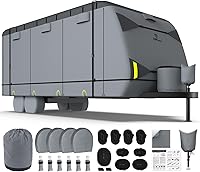
The RVMasking cover, for example, uses a 9-layer non-woven fabric with a 4% anti-UV composite in its build.
Water is the second threat. Standing rain sits in roof seams and around vents.
A water-repellent outer coating makes rain bead up and roll off instead of soaking in.
Dirt and tree sap are the quiet costs. A covered roof stays clean, so spring prep is a rinse rather than a scrub.
Bird droppings and dust that would bake onto the roof land on the fabric and wash away.
When is a camper cover not worth the money?
A cover stops paying off when the trailer already lives indoors or when wind exposure is severe.
If your camper sits in a garage or a covered bay, sun and rain never reach it. A cover then only adds dust protection, which a quick rinse handles for free.
Coastal or open-plain wind is the other problem. A loose cover flapping against sharp corners scuffs paint and wears through.
Even a good cover needs its straps checked after every big blow, and that upkeep is part of the value math.
Also skip a cover if the trailer has a leak. A cover hides the leak and traps damp air underneath.
Fix the roof first.
Which cover features decide whether it's worth it?
The features that matter are vents, a breathable layer and enough straps to stop flapping.
Vents let water vapor escape. A sealed cover over a warm trailer builds condensation, so vent count matters more than thickness alone.
The RVMasking cover runs 8 vents across its sides and ends for that reason.
The breathable membrane in the middle layer lets moisture out on sunny days while keeping rain out. Without it, a thick cover can trap damp air against the roof.
Straps are the third key. Over-roof straps, a long horizontal strap around the bottom and elastic hems keep the cover snug, and snug means fewer scuffs.
The RVMasking set pairs two over-roof straps with an extra-long horizontal strap that wraps under the trailer, plus bottom windproof straps and front and rear tension panels.
Zippered panels are a convenience, not a value test. They help you check inside without pulling the whole cover.
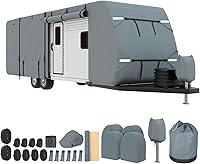
The Mofeez cover offers 2 zipper panels, and the RVMasking cover has 3 roll-up side panels plus a rear zipper panel aimed at toy hauler trailers.
What do the accessories add to the value?
Accessories count as part of the package value, because they protect spots the main cover misses.
The RVMasking set includes 4 tire covers and a propane tank cover, plus a tongue jack cover, 6 gutter spout covers, 2 weighted toss metal sticks for strap installation and a repair patch. The Mofeez set ships with 4 tire covers, a jack cover, a ladder cover, gutter covers with a sponge design, a toss bag and an adhesive repair patch.
Those extras matter because sun cracks tire sidewalls and rust works on the jack pole. Buying them separately adds cost, so a cover that bundles them is worth more than its headline price suggests.
Does a camper cover really stop moisture problems?
No, a cover prevents the outside water that causes most moisture problems, but it can't dry a wet trailer.
Rain and snow come from outside and the cover blocks them. Condensation forms inside and needs a path out.
A waterproof membrane stops the rain side; the breathable layer and vents handle the vapor side.
That's why vented covers with a breathable layer work while sealed tarps don't. A tarp keeps rain off but seals vapor in, which is where the mold stories start.
The other half is the trailer, not the cover. A dry trailer under a vented cover stays dry.
A trailer with a wet interior or a known leak will grow mildew under any cover. That's why drying the camper before covering is a step, not a suggestion.
For the full debate, our guide on whether RV covers trap moisture digs into the venting side.
How do you fit a cover so it's worth the cost?
Fit matters more than price. A snug cover that matches your trailer's length and shape protects better than a premium cover that's too big.
Measure the trailer's box length, not the hitch-to-bumper length. A cover cut for a 24 to 27 ft trailer won't fit a 30 ft box.
The RVMasking cover is sized for 26'1" to 28'6", while the Mofeez 24 to 27 ft model is built to 330"L x 102"W x 104"H. Check those numbers against your trailer before ordering.
Shape matters too. A travel trailer cover on a toy hauler leaves gaps and strain points.
That's why the RVMasking cover includes a rear zipper panel for toy hauler loading, and why the Mofeez line lists separate sizes from 14 to 16 ft up through 33 to 35 ft boxes.
How do you install a cover without fighting it?
Installation goes faster with the toss sticks and buckle straps the better covers include.
Lay the cover out on the roof from front to back and unfold it as you go. Work from a ladder at the sides, not on the roof, unless the roof is rated for your weight.
Once the cover is draped, hook the front and rear straps first, then the over-roof straps.
The weighted toss metal sticks let you throw the bottom straps under the trailer without crawling. Buckle straps keep the cover from billowing, and the elastic hem pulls the fabric snug around the base.
A second person cuts the time in half on a 26 ft trailer.
How much does cover material change the value?
Material choice sets how long the cover lasts, and that's the real value test.
Thicker fabric resists tears at corners. Reinforced patches at all 8 corners, not just 4, reduce punctures from sharp edges.
The RVMasking cover upgrades its corner protection this way and adds heightened rear corner patches to guard against ladder edges. That detail matters because the rear corner is where a ladder usually leans.
Weight matters for install. Heavy fabric is durable but harder to lift onto a tall trailer roof.
A thick cover that's hard to install gets skipped, and a skipped cover protects nothing.
Color affects heat. Dark gray fabric hides dirt but absorbs more sun.
Lighter covers reflect more heat. Both covers here come in gray tones, so in a hot climate the venting does the cooling work.
For sun-heavy climates, compare RV covers built for sun protection before picking a color.
What's the real cost of skipping a cover?
Skipping a cover trades a modest cover cost for roof and seal repairs later.
Sun damage shows up as faded gelcoat, brittle vent covers and cracked sealant. Replacing sealant every couple of years costs more than a cover that lasts several seasons.
A cover with UV protection slows that cycle and keeps the sealant soft longer.
Rain damage is slower but deeper. Water works into roof seams and around skylights.
By the time you notice a soft spot, the repair is a roof job. That's the gap a cover closes.
Dirt and sap add labor. A covered trailer needs a rinse in spring.
An uncovered one needs a scrub of the roof and sides before every trip. Add up a few seasons of scrubbing and the cover cost looks small next to the hours.
Should you buy a cover for your camper?
Buy a cover if your trailer sits outside in sun or weather for more than a few weeks at a time. That's the case where the protection clearly outweighs the cost and the install effort.
Skip it if the trailer lives indoors or if you're in a spot with constant high wind and no shelter. In those cases put the money into roof care and a good storage spot.
If you do buy, match the size to your trailer's box length and pick a cover with vents, a breathable layer and reinforced corners. A tight fit and regular strap checks decide whether the cover earns its keep.
The Adco patch kit covers the one loose end, since small tears happen and a patch stops them from spreading.
For pop-ups, our roundup of pop up camper covers covers the smaller sizes. Teardrop owners can compare teardrop camper covers for the compact shapes.
And for a closer look at one of the covers in this guide, the RVMasking RV cover review covers the fit and features in detail.
Frequently asked questions
Do camper covers cause mold inside the trailer?
Not when the cover vents and the trailer is dry when covered. Moisture problems usually start with a leak, a wet interior or a cover laid over a damp roof.
Ventilated covers with side panels let water vapor escape instead of sealing it in.
How long does a camper cover last?
A few seasons is typical for a good multilayer cover left in full sun. Wind is the bigger enemy than sun, because a loose cover flaps and wears through at corners and straps.
A snug fit and tight straps add years.
Can I cover a camper that is still wet?
No. Let the roof, sides and seams dry first, then cover.
Trapping water under a cover keeps seals and trim damp for months and invites mildew.
A dry cover over a dry camper is the whole point.
Are camper covers worth it if I store indoors?
Usually not. Indoor storage already blocks sun and rain, so a cover mainly adds dust protection.
Save the money unless your storage space is dusty or shared with equipment that could scuff the trailer.