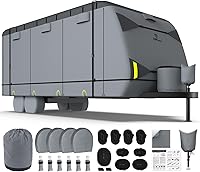
How to Install a Travel Trailer Cover
To install a travel trailer cover, park on level ground, clean and soften anything that could snag the fabric, then lift the rolled cover onto the roof and unroll it front to back. Center it side to side, pull the hem down over the corners, and snug the straps without crushing the panels.
On this page (10 sections)
- What should you do before you put the cover on?
- How do you protect the cover from sharp edges?
- How do you get the cover onto the roof safely?
- How do you center and pull the cover down?
- How do you secure the straps without over-tightening?
- How do you keep the cover from flapping in the wind?
- How do you handle the access panels and zippers?
- What mistakes should you avoid on the first install?
- How do you take the cover off and store it?
- Which cover and straps fit your install?
To install a travel trailer cover, park level, prep the roof and edges, lift the cover up in its rolled form, and unroll it from front to back. Center it side to side, pull the hem over the corners, and snug the straps so the fabric stays put without pulling tight against anything sharp.
The job goes faster with two people, but one careful person can handle a smaller trailer. Most of the effort is in the preparation, not the lifting.
A clean, snag-free roof is what keeps the fabric from tearing on the first windy night.
What should you do before you put the cover on?
Start with a level, safe parking spot and a clean trailer. Everything you skip here shows up later as a tear, a scratch or a trapped stain under the fabric.
Park where you can reach both sides and the roof without stretching. Turn off the propane at the tank and let the appliances cool before the cover goes on.
A warm chimney or exhaust vent can mark the fabric.
Close and latch every roof vent, skylight and hatch. Fold antennas down and remove anything that stands up, including the TV aerial and any solar panels that are not flush mounted.
Wash the trailer and let it dry fully. Dirt under the fabric acts like sandpaper in the wind, and bird droppings left under a cover can stain the panels for good.
How do you protect the cover from sharp edges?
Pad every sharp corner and rough edge the fabric will touch. Gutters, awning rails, ladder steps and the jack post are the usual culprits.
Wrap the gutter spouts and awning rail ends with foam pipe insulation or the gutter covers that ship with many covers. Tape the padding so it cannot slide off while you are lifting the fabric.
Check the roof for screw heads that stand proud and seal or cover them. Run a hand along the edge trim and feel for burrs.
A cheap pool noodle cut into short lengths works well on the corners of the trailer.
If you find small holes in the trailer's trim or in an older cover, a repair kit earns its place in the storage bin. The ADCO 9024 kit includes six adhesive-backed fabric patches in different colors for reinforcing and repairing cover material.
Keep the kit with the cover so a small rub mark gets patched before it becomes a rip. Patches go on a clean, dry surface and press flat.
How do you get the cover onto the roof safely?
Lift the cover in its rolled or bagged form, not unfolded. Carry it up a sturdy ladder and set it on the roof before you spread any fabric.
Use two people for a long trailer. One person climbs with the roll while the other steadies the ladder and feeds the fabric up.
Keep three points of contact on the ladder at all times.
Set the roll near the middle of the roof and check that the front and rear panels are oriented correctly. Most covers have a marked front and a door or zipper panel that belongs on the curb side.
Never drag the roll across the roof or the edge trim. Lift and carry it, then unroll it front to back so the fabric lands roughly in place.
How do you center and pull the cover down?
Unroll from the front edge toward the back, then pull the sides down evenly. Centering first saves you from sliding the whole cover sideways later.
Let the fabric drape over both sides and compare the overhang at the front and rear. Nudge the cover until the seams and zipper panels line up with the trailer's doors.
Small shifts are easier while the cover is still loose.
Work the hem down over the corners one at a time. Pull gently at the fabric rather than the straps, and let the cover settle.
A cover that fights at the corners usually needs a little more slack before the hem will clear the trim.
Check that any zipper panel lines up with the entry door. A misplaced door panel means the cover has to come off and go back on the right way round.
How do you secure the straps without over-tightening?
Run the underbelly straps beneath the frame and snug them by hand. The straps hold the cover down; they are not meant to squeeze the trailer.
Feed the strap under the frame with the toss sticks or rope supplied with the cover. Bring both ends up to the buckles on each side.
Then work from the middle of the trailer toward the ends so the fabric stays even.
Snug each strap until the fabric stops flapping. Leave the panels slightly loose so air can move and water runs off.
Over-tight straps stretch the hem and can pull the cover off the roof edges.
If the cover came with too few straps or you want a spare set, the RV MURTS tie down kit gives you two 40 ft straps with quick-release cam buckles. They suit most RV covers, travel trailer and fifth wheel designs.
The cam buckles save time when you fit and remove the cover each season. Run the straps flat so they do not twist, and check them after the first windy day.
How do you keep the cover from flapping in the wind?
Block the wind at the roof and the hem. Wind is what wears covers out, so a snug fit and a clear gap-free roof matter more than extra straps.
Covers with over-roof straps and a long horizontal strap hold the top panel down better than covers that rely on the hem alone. The RVMasking 24-26 ft cover uses 600D Oxford fabric on top and 300D on the sides, with two over-roof straps and an extra-long horizontal strap that wraps the bottom.
It also ships with four tire covers, a tongue jack cover, gutter spout covers, toss sticks and a repair patch. The zippered side panels let you reach the door without pulling the cover off.
For a closer look at how it compares, see our RVMasking RV cover review.
If the trailer sits in an exposed spot, face the front of the cover into the prevailing wind. Tighten the front and rear tension panels first, then the middle straps.
How do you handle the access panels and zippers?
Line up the door panel, then open only what you need. A cover with roll-up side panels lets you reach the door, storage hatches or the tongue jack without loosening the whole fit.
Zip the panels closed again when you are done. An open panel flaps and lets rain in.
If the panel doesn't reach the door, the cover is either misaligned or the wrong size for the trailer.
Keep the zipper tracks clean and free of grit. A little silicone spray on the zipper helps it run smoothly without staining the fabric.
Roll the panel up and tie it before opening the door wide.
What mistakes should you avoid on the first install?
The common failures are lifting a cover unfolded, skipping edge padding and over-tightening straps. Each one shortens the cover's life or risks damage to the trailer.
Other mistakes to skip:
- Covering a wet or dirty trailer.
- Leaving roof vents open or antennas up.
- Pulling the cover across sharp trim instead of lifting it.
- Forgetting to check the straps after the first windy day.
Walk around the trailer once the cover is fitted. Look for any panel touching a sharp edge, any strap hanging loose and any hem sitting above the roof line.
Fix those before the first storm, not after.
How do you take the cover off and store it?
Reverse the install: loosen the straps, lift the fabric off the corners and roll it up from the back. Fold or roll it loosely so it fits back in its storage bag.
Take the cover off on a dry day and let it air for an hour before folding. Brush off any dirt or leaves first.
Roll rather than stuff it so creases don't weaken the same spots each season.
Store the bag indoors, off the floor, away from mice and damp. A dry garage shelf works well.
Note the fit or any wear spots so you can patch them before the next season.
Before you buy a replacement or a first cover, match the length to your trailer and check the fabric weight. Our guide to the best RV covers for travel trailers sorts options by trailer length.
If you tow a smaller folding unit, compare pop up camper covers instead.
Which cover and straps fit your install?
The right cover makes the install easier because the panels and straps land where they should. Start by matching the cover to your trailer's length and roof shape.
For most travel trailers in the 24 to 26 ft range, the RVMasking 600D Oxford cover is the pick. It brings over-roof straps, a long bottom strap and the tire, jack and gutter accessories in one box.
Compare it with other sizes in our guide to camper covers for travel trailers.
Add the RV MURTS tie down straps if you want spare underbelly straps or quicker cam buckles. Keep the ADCO patch kit in the storage bag for small repairs.
The order matters more than the gear: prep the roof, pad the edges, lift the cover rolled, center it, then snug the straps. Follow that sequence and installing a travel trailer cover becomes a short job you can repeat each season.
Frequently asked questions
Can one person install a travel trailer cover?
Often yes, if you use the toss sticks or tie ropes supplied with the cover to pass the straps under the frame. A second person helps most on covers for trailers over about 20 ft, where the fabric gets heavy and awkward to center alone.
Should you cover a travel trailer when it is wet?
No. Let the trailer and the cover dry first.
Trapping moisture under the fabric keeps the roof damp and can leave stains or mildew on panels, so wait for a dry stretch of weather before fitting it.
How tight should travel trailer cover straps be?
Tight enough that the fabric no longer flaps, but not so tight that the panels pull flat against sharp corners or the hem rides up. Snug the straps by hand and recheck them after the first windy day.
Can you leave a travel trailer cover on all year?
Yes, for most breathable covers. Check the straps and the roof panel every few months, clear snow without scraping, and patch small tears before they spread so the cover keeps working through the seasons.
What do you do if the cover is too long for the trailer?
Gather the extra fabric at the rear and secure it with the straps so it cannot flap. A cover several feet too long is hard to keep tight, so match the next one to the trailer's length including the hitch or bumper as the maker instructs.